Developing neurographic specimens: one set of events
Upon receiving the first periods of data, I set about trying to determine what the design problem was. What were my elements? Being unfamiliar with code, the way I started to familiarize myself with the process was to code literally by hand. Setting up the file in Illustrator, I then marked out distance, time, and events. Working by hand was ultimately a very slow process and unproductive as a result in some aspects. On the other hand, the primary gain in working in this manner was to have freedom to experiment without being constrained by coding language. In addition, the process taught me natural or existing attributes of the data, such as difference between values, or total lines of numbers, etc. One of the essential lessons I learned in this process was how simple marks ultimately gave greater flexibility in how they could visually operate as a form and in behavior.
20 specimens: variations on a theme
Computer processing provides an immediate result which allows for generating variations relatively easily. One benefit to rapid generation is that one can assess a certain command or quality of visual expression by the body of work that is generated. One can start to assess that certain qualities are good in one form of visualization over another.
A parallel way to think about this process is to think of the specimens in terms of music. Variations work in the same way where a melody can act as structure or a unifying them. Variations are constructed to retain the same melody or qualities of the melody. composers use varitiosn of a theme to enhance particular tones, harmonies or chords–each highlighting a different feeling–while retaining an echo of the inner structure of melody. Likewise, developing neurographic specimens involved the same principle.
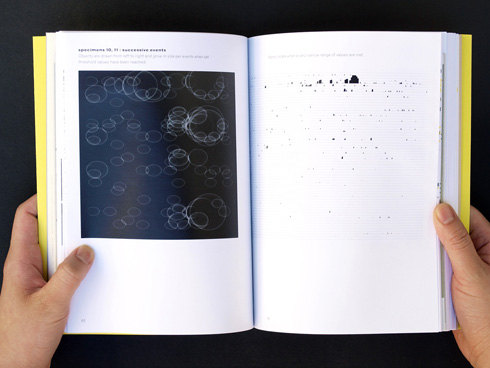
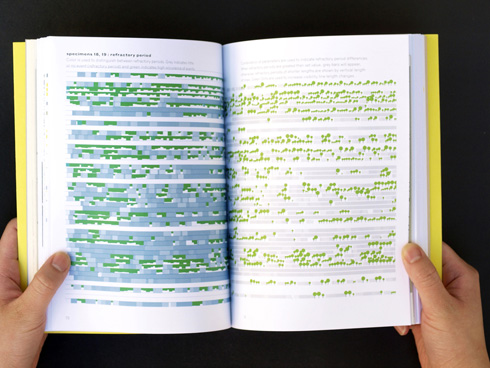
The specimens are organized into two categories: succession of events and refractory periods.
(click on image to download more specimens!)
The welch grid also used processing as the programming platform but functioned and is utilized in a totally different manner.